
NASA/Johns Hopkins APL
NASA wires up Dragonfly and names the landing area
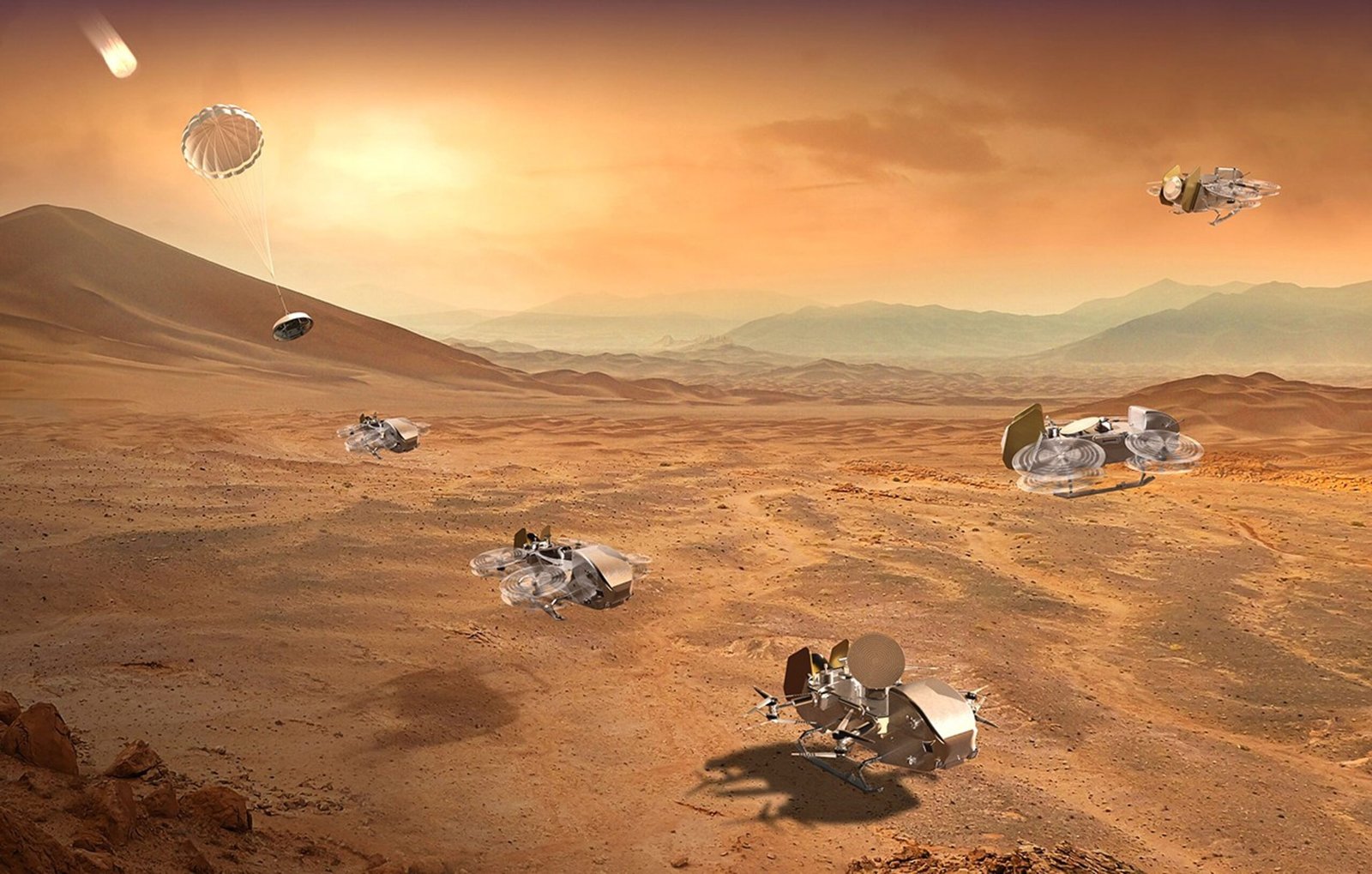
Dragonfly is gearing up to land on Saturn’s moon Titan with a name that fits its dune-hopping mission: Ahmakiq Undae. NASA and the IAU confirmed the title as the rotorcraft advances toward a 2028 launch and a late-2034 arrival on Titan. The craft is a nuclear-powered flying laboratory built to endure Titan’s dense, cold air, with temperatures dropping as low as -179°C and possible liquid methane rain.
After a lengthy build and recent wiring harness integration—roughly 5,278 metres of conductor wire, 374 connectors, and a 45-kilogram harness paired with a nearly 136-kilogram battery—the mission moves to final assembly of avionics and instruments. Dragonfly’s mission spans diverse environments, from organic dunes to Selk Crater’s deposits, promising up to 3.3 years of exploration. The project is a long-awaited upgrade from Huygens, combining flying mobility with on-site science, while costs soared to about US$3.35 billion and delivery slipped due to pandemic and supply-chain issues. Launch is planned no earlier than July 2028 on SpaceX’s Falcon Heavy.