
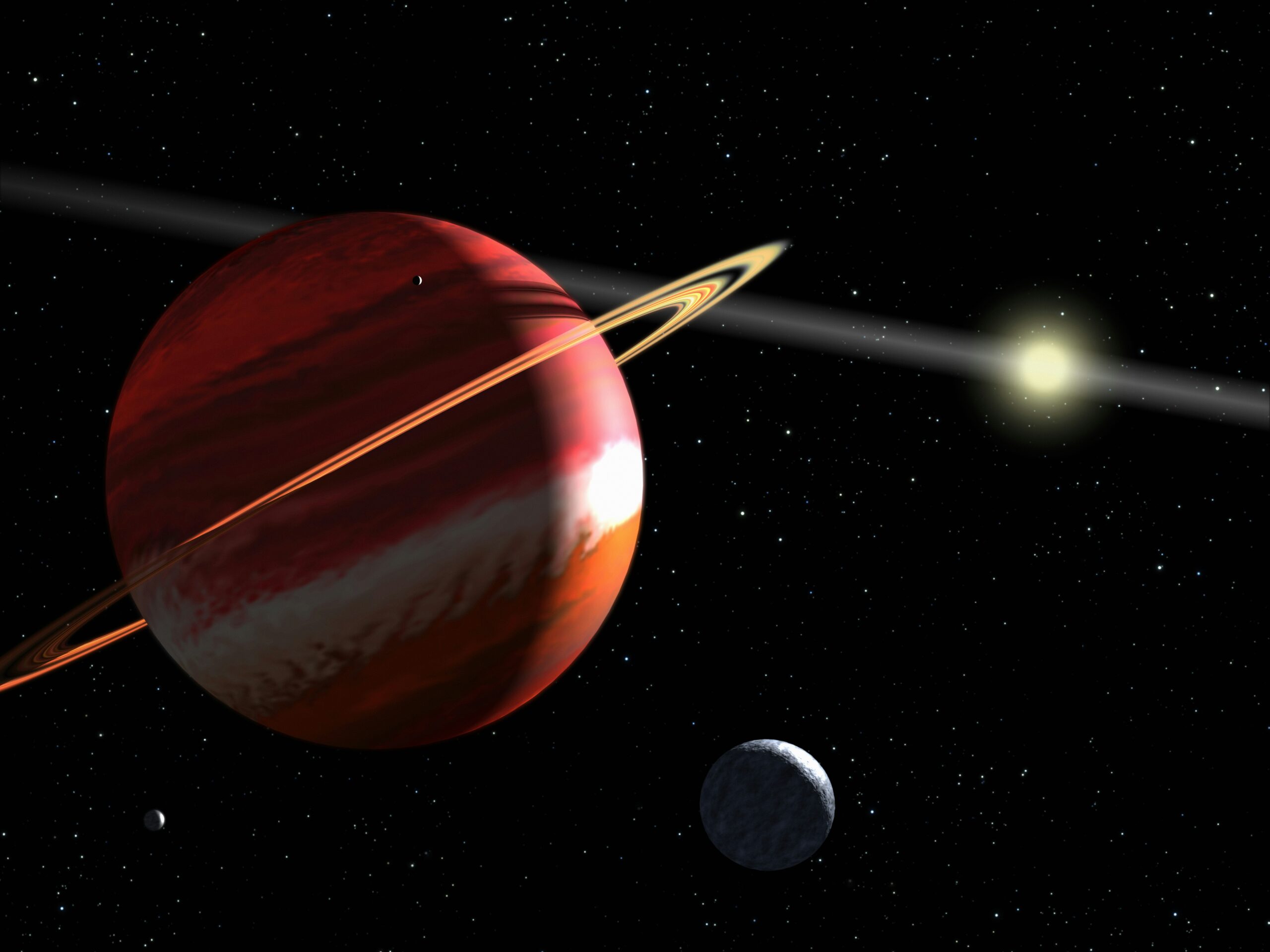
Astronomers spot exomoon candidate that’s almost as massive as Jupiter
A team affiliated with Universidad Diego Portales and the European Southern Observatory in Chile reports a potentially groundbreaking find: an object orbiting a brown dwarf that itself orbits a star about 73 light-years away. Using the radial velocity method, they infer an exosatellite with at least Jupiter’s mass, orbiting its dwarf every 170 days. This sits in a definitional gray area—massive enough to be a planet, yet not orbiting a star directly. The result doesn’t yet meet a formal exomoon definition, but it marks a major step toward confirming satellites beyond our Solar System as telescopes and methods improve. For now, it’s a “moon-like” candidate that broadens how we think about planetary systems and sets the stage for sharper detections in the near future.